
Using Nettles to Support Butterflies and Bees

A Patch with a Purpose
Most gardeners meet stinging nettles with a hoe and a sigh. They spread, they sting, and they seem to appear wherever the soil is rich and undisturbed. Yet in a wildlife-friendly garden, a controlled patch of nettles is one of the most valuable things you can grow. It is a native British woodland-edge plant, at home in dappled shade and hedgerow bottoms, and it quietly feeds some of our best-loved butterflies and birds. The trick is not to let it run wild, but to give it a place and manage it with intent.
If you have a corner behind the shed, a strip along a north-facing fence, or a damp patch under a mature tree, you already have a potential nettle bed. With gloves, a plan and a little patience, you can turn that scruffy corner into a nursery for red admirals, peacocks and commas.
Why Nettles Are a Wildlife Powerhouse
Stinging nettle is a larval host plant for several British butterflies. The females lay eggs on young, tender leaves, often at the tips of shoots in sunny, sheltered spots. The caterpillars then feed on the foliage, sometimes spinning loose webs between leaves for protection. Without nettles, these butterflies cannot complete their life cycles in your garden.
Nettles are wind-pollinated, so they do not offer nectar to bees in the way that foxgloves or marjoram do. Their value for bees is more about shelter and structure. A dense nettle patch provides cover for ground-nesting bees, and if you leave some stems standing through winter, they can be used by small solitary bees that nest in hollow or pithy stems. The patch also supports aphids, which in turn feed ladybirds, hoverflies and lacewings — many of which are pollinators or pest controllers. In short, nettles are a hub in the garden food web.
Which Butterflies Need Nettles?
Red admiral caterpillars feed on nettles, usually on fresh growth in sunny positions. The adults are strong migrants, but in recent years more have overwintered in the UK, so a reliable nettle patch helps them breed here.
Peacock caterpillars live communally in silken webs on nettle tops. They prefer vigorous, young shoots, often in open woodland, hedgerows and gardens. A patch that is cut back in early summer will produce the tender regrowth they need for a second brood.
Comma caterpillars also use nettles, particularly along woodland edges and hedgerows. The adults have scalloped wings and a habit of basking on logs and leaves. A nettle bed near a sunny hedge or shrubby border suits them well.
You may also attract small tortoiseshells, another nettle specialist. To give these butterflies the best chance, site your nettles in sun for at least part of the day, and avoid spraying or cutting the whole patch at once. Adults will still need nectar, so plant nearby flowers such as buddleia, verbena, sedum, marjoram or ox-eye daisy.
Seeds, Stems and Winter Shelter
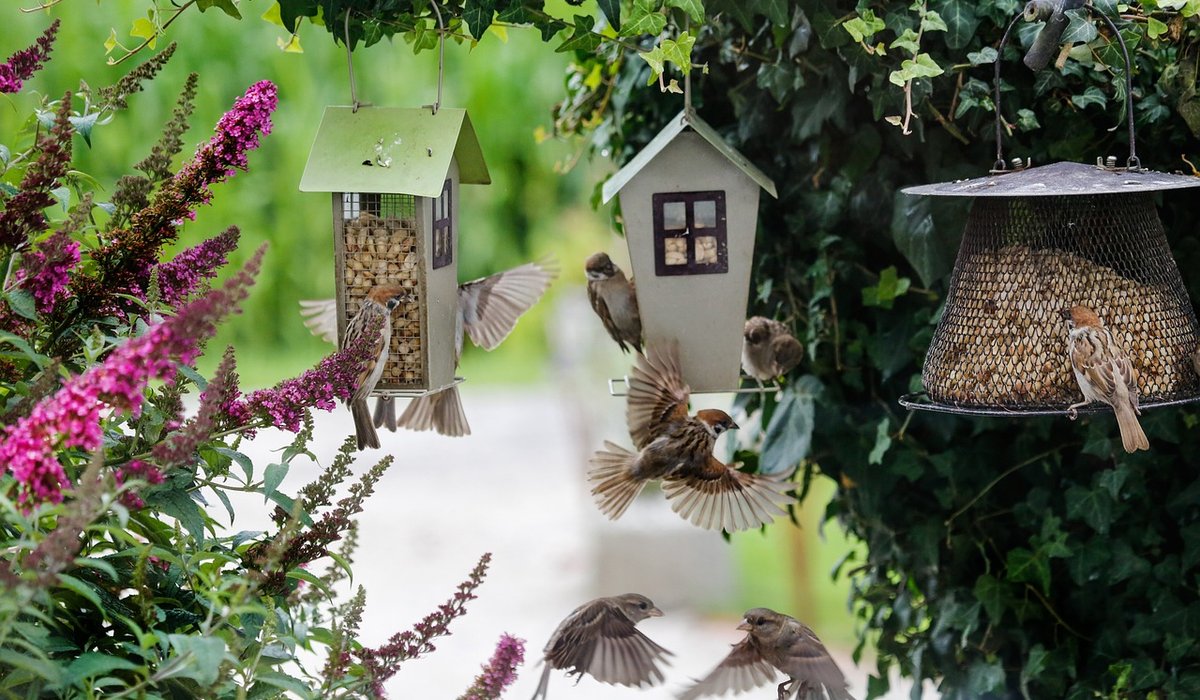
Nettle seeds are tiny but nutritious. If you leave some flower heads to ripen and set seed in late summer and autumn, you will feed seed-eating birds such as goldfinches, bullfinches and house sparrows. Goldfinches in particular are fond of nettle seeds and will cling to the stems to pick them off.
Try to leave at least a third of your nettle patch uncut through autumn and winter. The standing stems provide overwintering cover for insects, and the seed heads offer a natural bird feeder. In spring, cut the old stems back before new growth starts, but pile them in a quiet corner rather than shredding them straight away — insects may still be sheltering inside.
How to Grow and Manage a Nettle Patch
Nettles spread by seed and by tough underground rhizomes. In a small garden, the easiest way to keep them in check is to sink a bottomless bucket or a sturdy root barrier into the soil and plant your nettles inside it. Choose a spot in partial shade or sun, ideally near a hedge, fence or woodland edge. Nettles like rich, moist soil, so add well-rotted compost if your ground is poor.
- Plant in spring or autumn from seed or small divisions, and water regularly until established.
- Wear gloves, long sleeves and boots when working near nettles. The sting is unpleasant but temporary.
- Cut in rotation, not all at once. Cut one-third in early June to encourage fresh growth, one-third in late July, and leave the rest for seeds and winter stems.
- Never use weedkiller on or near your nettle patch. It will harm the very wildlife you are trying to help.
- Make nettle feed. Steep cut leaves in water for two weeks, then dilute to feed hungry vegetables and flowering plants. The smell is strong, but the results are excellent.
Nettles Among British Woodland Plants
In the wild, nettles often grow alongside classic British woodland plants: bluebells, wood anemones, wild garlic, primroses and dog violets. You can recreate this layered woodland feel in a shady corner by combining your nettle patch with ferns, foxgloves and native shrubs such as hazel or hawthorn. The nettles will rise through the spring growth, providing butterfly larvae with food while the woodland flowers feed early bees and hoverflies.
Keep paths clear and allow a little untidiness. A nettle bed does not need to look neglected — edge it with logs, leave a mown path around it, and let the seed heads stand against a dark hedge. In return, you will get caterpillars, birds and a garden that feels alive. Stinging nettles may never be a favourite plant to brush against, but as a wildlife tool they are hard to beat.

Joeby Ragpa
This template is so awesome. I didn’t expect so many features inside. E-commerce pages are very useful, you can launch your online store in few seconds. I will rate 5 stars.
ReplyAlexander Samokhin
This template is so awesome. I didn’t expect so many features inside. E-commerce pages are very useful, you can launch your online store in few seconds. I will rate 5 stars.
ReplyChris Root
This template is so awesome. I didn’t expect so many features inside. E-commerce pages are very useful, you can launch your online store in few seconds. I will rate 5 stars.
Reply