
Understanding Grey Squirrels in the Garden

Grey squirrels are the most acrobatic garden visitors most of us have, and they are here to stay. Understanding their habits makes the difference between a garden that feels constantly raided and one where you simply notice them, enjoy the show, and keep your bird feeders more or less intact.
Getting to Know Your Resident Grey Squirrels
The grey squirrel (Sciurus carolinensis) arrived in Britain in the nineteenth century and has long since become part of the furniture. It is a woodland animal that has adapted brilliantly to gardens, particularly those with mature trees, hedges and plenty of feeding opportunities.
Learn their routine and you gain an advantage. Squirrels are busiest in the first two or three hours after dawn and again in late afternoon. They are staggeringly athletic: a leap of two metres from branch to fence is routine, they can run down a trunk head-first thanks to rotating ankle joints, and they will happily walk along a washing line or traverse a wall top to reach a feeder.
Each squirrel holds a loose territory, and if you have one raiding your feeders, you can be fairly sure of a small cast of regulars rather than an endless stream of newcomers. They build dreys — bundles of twigs and leaves lined with soft material — high in trees, and will often nest in a loft if there is a gap, so it is worth checking roof edges and eaves each autumn.
Why Bird Feeders Are the Main Battleground
Peanuts, sunflower hearts, fat balls and seed mixes are all squirrel food as far as they are concerned. A single determined grey can empty a hanging feeder in an hour or two, often knocking it about until seed spills onto the lawn, and metal ports and plastic bodies take a real hammering over time.
There is a wildlife-gardening argument on both sides. Squirrels displace tits and finches and take food intended for them, and they will raid nest boxes for eggs and chicks in spring. Yet the seed they spill does feed ground-feeders such as dunnocks, robins and chaffinches. The practical aim is not eradication but management: keep the squirrel effort high and the reward low, so the birds get a fair share.
Baffles, Cages and Clever Placement
A collection of modest defences will transform your feeding station. Squirrels are excellent climbers and jumpers, so the trick is to break their route in rather than rely on any single gadget.
- Fit a metal baffle — a wide dome or a length of stovepipe — on any feeder pole, positioned at least 1.8 metres from the ground and at least 60 centimetres wide so it cannot be reached around.
- Move feeders away from launch points. Anything within about three metres of a fence, shed roof, wall or overhanging branch is effectively served to them on a plate. Out in the open, on a smooth pole, is far better.
- Choose cage feeders with a wide mesh surround, which let small birds through but stop squirrels reaching the food, or weight-sensitive feeders that close their ports under a heavy visitor.
- Hang feeders from a wire between two poles with baffles at each end, or use a spring-loaded baffle that dips and tilts under weight.
- Keep fat balls in metal cages, not open mesh bags, and check feeders weekly for chewed ports and split seams.
If a squirrel still gets through, watch how it does it before buying anything else — the weak point is almost always the launch pad, not the feeder.
Nuts, Bulbs and the Woodland Planting Connection
Squirrels are scatter-hoarders. Through autumn they bury single nuts, acorns and cobs in hundreds of small caches, then fail to recover a good proportion of them. That is one reason oaks and hazels appear in odd corners of gardens, and it is a genuine ecological service: forgotten caches are new trees.
In the border, the same instinct is less welcome. Freshly planted crocus, tulip and camassia bulbs are dug up and eaten, and young shrubs are sometimes nibbled or stripped of bark, especially acers, beech and maples. Protect bulbs by planting them deeper than the packet suggests — two to three times the recommended depth — or by sinking them in a woven basket or mesh pot. A layer of prickly prunings over the planting spot also helps.
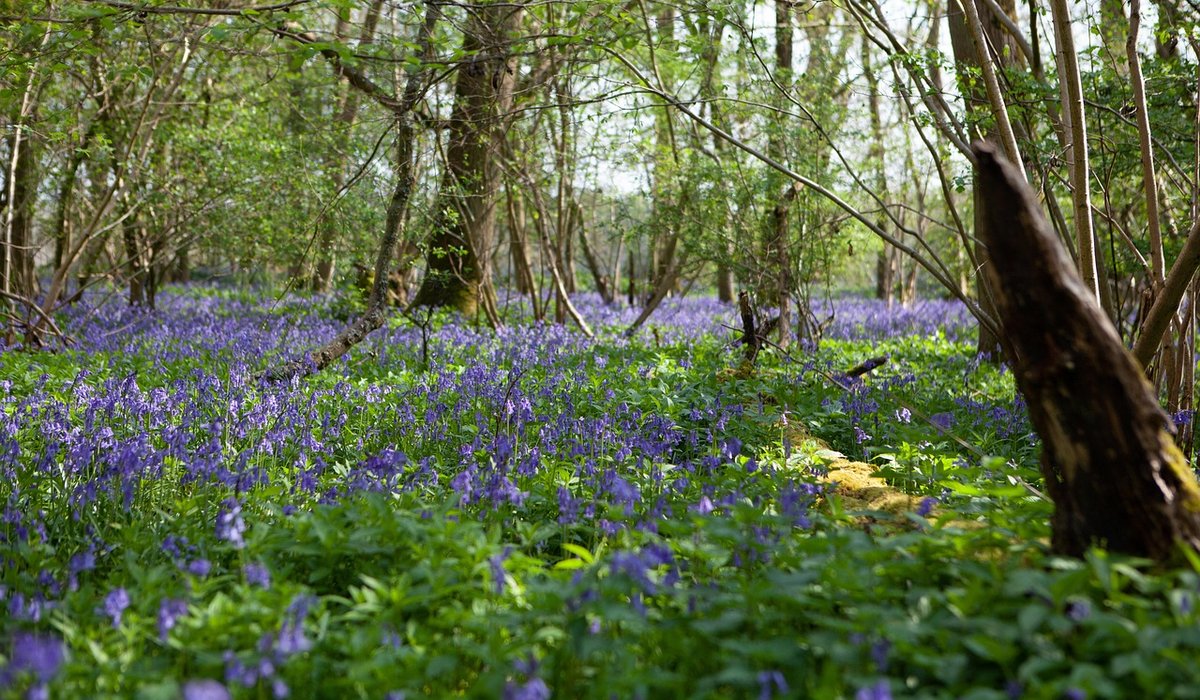
The pleasing counterweight is a woodland-style garden. Plant native British species that suit a shady, layered structure: bluebells, wood anemone, wild garlic, foxgloves, primroses, honeysuckle and dog's mercury, under hazel, hawthorn and oak. These plants evolved alongside browsing and digging animals, and a garden built around them copes with squirrels far better than a neat display of tender bulbs. A few squirrel-dug patches are simply the price of a garden that is alive.
Deterrents That Actually Help
No method is foolproof, but combining a few sensible ones works well.
- Distraction feeding: a dedicated feeder filled with maize or cobnuts, sited well away from the bird feeders, can keep squirrels occupied elsewhere.
- Taste deterrents: chilli or garlic sprays on bulbs and young shoots deter digging, though they need reapplying after rain.
- Scent and texture: loose netting, prickly hedge clippings and gravel mulches make a patch less inviting to dig.
- Remove easy meals: clear spilled seed, keep compost bins lidded and never leave bin bags out overnight.
- Block access: repair loft gaps and eaves with metal mesh rather than plastic or expanding foam.
Ultrasonic devices are unreliable, and motion-triggered water sprayers work better as a short, harmless surprise than as a permanent solution. Never hand-feed squirrels: it encourages boldness, brings them indoors, and increases the risk of bites.
Enjoying the Show
Once the feeders are baffled and the bulbs are safe, it is worth simply watching them. A grey squirrel working out a new obstacle course is one of the best displays in the garden — the balance, the problem-solving, the sheer nerve of a leap across open air.
If you live in a red squirrel area, in parts of Scotland, northern England, Wales and Northern Ireland, the picture changes. Do not encourage greys, and report sightings to your local red squirrel group so that conservation work can continue. Everywhere else, treat them as what they are: a handsome, maddening, thoroughly entertaining resident that has moved in for good.

Joeby Ragpa
This template is so awesome. I didn’t expect so many features inside. E-commerce pages are very useful, you can launch your online store in few seconds. I will rate 5 stars.
ReplyAlexander Samokhin
This template is so awesome. I didn’t expect so many features inside. E-commerce pages are very useful, you can launch your online store in few seconds. I will rate 5 stars.
ReplyChris Root
This template is so awesome. I didn’t expect so many features inside. E-commerce pages are very useful, you can launch your online store in few seconds. I will rate 5 stars.
Reply