
Putting Up a Bat Box for Evening Visitors

Why bats are worth a place in your garden
A common pipistrelle can hoover up around 3,000 small insects in a night, and it does so on the wing, over your borders and lawn. That alone makes bats excellent neighbours. But British bat numbers have fallen steeply over the last century, and one of the main reasons is simple: we have made our buildings and our woodlands too tidy. Sealed eaves, rendered walls and smooth modern brickwork offer almost nowhere to roost, while the old dead and dying trees with loose bark, rot holes and cracks that bats once relied on are often cleared away.
A bat box on a wall is a small, cheap way to put that back. You will never see a bat in the box itself — they are secretive, and rightly so — but you may well see one drop out at dusk, and that is a very good feeling.
Which box, and what to look for
Most garden bats in Britain are pipistrelles, and the classic crevice box suits them well. Look for a gap of roughly 15–25mm rather than a roomy chamber; bats want to be snug, and a narrow slot holds warmth far better than a draughty box.
- Crevice boxes are the best all-rounder for pipistrelles, and often for Natterer's and whiskered bats too.
- Larger cavity boxes with a deeper chamber occasionally attract brown long-eared bats or even a noctule.
- Material matters. Woodcrete or wood-cement boxes are heavy, weather well and hold a steadier temperature — they can last twenty years or more. Untreated, rough-sawn oak or larch is cheaper but usually gives you eight to ten years.
- Avoid pressure-treated timber, and never paint, varnish or creosote the inside.
If your budget stretches to it, hang two or three boxes with slightly different aspects. Bats are fussy about temperature and will move between roosts as the weather changes.
Siting: height, aspect and the dark
Aim for about 3–5 metres above ground. In Britain, a south or south-west facing wall is the traditional choice because it warms up early and holds heat into the evening. It should also be reasonably sheltered from the prevailing wind and driving rain — bats loathe a damp, draughty roost.
Keep the flight path clear. Leave a metre or two of open air beneath and in front of the box, well away from trailing branches, wires, climbing plants and anything else that could snag a bat coming in. Avoid hanging a box directly above a door or window, where droppings will land on the sill and comings and goings will disturb the roost. Smooth walls are best, with no handy ledges below for cats to sit on.
Light is the deal-breaker. Artificial light makes bats emerge later, feed less and abandon roosts altogether. Keep boxes well away from security floodlights, illuminated signs, bright windows and streetlights, and if a PIR floodlight sweeps across the wall where you want to hang it, either move the box or re-aim the light.
Fixing and finishing touches
Wall-mounted boxes are generally the more dependable choice in a garden, holding steadier temperatures than boxes strapped to a swaying tree trunk. Fix into masonry with stainless steel screws or bolts, using a bracket if the box design calls for one, and check it is tight with no rattling gaps. If you are mounting on timber cladding, screw into the studs behind it, not just the boards.
Do not add preservatives, and do not plan on cleaning the box out each winter. Bats keep their roosts remarkably clean, and a bit of old debris is part of the appeal. Once bats are using it, leave it alone entirely.
Planting for bats: British woodland plants that pull their weight
Bats do not eat plants — they eat the insects that plants feed. Native British woodland species support far more moths, midges and beetles than a bed of bedding plants ever will, and it is the night-time nectar and the larvae grazing on leaves that really count.
- Honeysuckle is the classic night-scented climber, drawing in moths after dark.
- Ivy left to flower in autumn is one of the best late-season larder plants for bats preparing for winter.
- Foxglove, red campion, wood avens, sweet rocket and evening primrose all offer nectar at dusk, when bats are hunting.
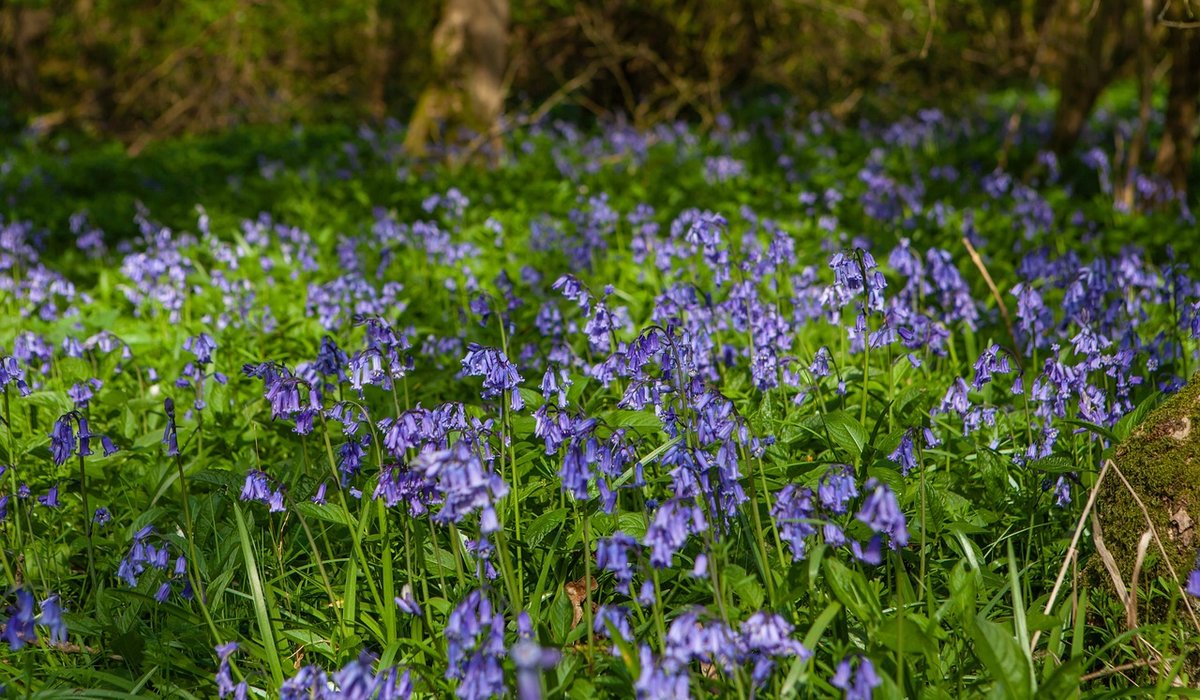
- Wood anemone, bluebell, ramsons, wood sorrel, primrose and lesser celandine make a spring woodland carpet that shelters larvae and insects.
- Oak, willow, birch, hazel, field maple and bramble are the trees and shrubs that support the greatest number of insect species.
A small pond or a boggy corner helps too — Daubenton's bats hunt low over water, taking insects from the surface. Skip the pesticides, and leave a little leaf litter and dead wood lying about instead of tidying it all away.
Watching, waiting and knowing the law
Do not be disheartened if nothing moves in during the first year. Bats find new roosts by chance, and it can take two or three seasons. Counts usually peak in July and August, when females gather in maternity roosts. Stand back about twenty minutes after sunset and watch for a small dark shape dropping from the box and flicking away over the hedge. A basic bat detector will confirm which species you have.
One important point: every British bat species, and every place they roost, is legally protected under the Wildlife and Countryside Act 1981 and the Conservation of Habitats and Species Regulations 2017. It is an offence to disturb, damage or obstruct a roost — and that includes a bat box on your own wall that bats have moved into of their own accord. No peering inside, no cleaning out, no shifting it to a better spot once it is occupied. If you need work done on that wall, take advice from your local bat group first, and do record your sightings with your county records centre so the picture of Britain's bats gets a little clearer.

Joeby Ragpa
This template is so awesome. I didn’t expect so many features inside. E-commerce pages are very useful, you can launch your online store in few seconds. I will rate 5 stars.
ReplyAlexander Samokhin
This template is so awesome. I didn’t expect so many features inside. E-commerce pages are very useful, you can launch your online store in few seconds. I will rate 5 stars.
ReplyChris Root
This template is so awesome. I didn’t expect so many features inside. E-commerce pages are very useful, you can launch your online store in few seconds. I will rate 5 stars.
Reply